



- 23rd Oct '26
- Ainycs
- 24 minutes read
5 Best Ways to Create Targeted Email Lists for Outreach Campaigns in 2026
In today's competitive B2B landscape, mastering the art of building a targeted email list is crucial for successful outreach campaigns. This guide explores five effective strategies to help you refine your approach in 2026. You will learn how to define your Ideal Customer Profile to ensure your emails reach the right audience, and how to leverage up-to-date databases like Snov.io for accurate contact information. Discover the importance of enriching and verifying your email list to maintain accuracy and relevance. The guide also covers prioritizing accounts based on engagement signals, organizing and automating your email list management, and keeping your list current to avoid contacting outdated or deactivated emails. Additionally, it delves into using lead magnets, optimizing form placement, personalizing campaigns, segmenting audiences, and conducting A/B testing to enhance your strategies. By following these steps, you can elevate your email marketing efforts and drive significant sales growth.
1. Define Your Ideal Customer Profile (ICP)
Clarify Your Target Audience
Before embarking on the journey of building your email list, it is crucial to define your Ideal Customer Profile (ICP). This step involves identifying the specific characteristics of the individuals or businesses that are most likely to benefit from your products or services. By doing so, you ensure that your outreach efforts are directed at the right audience, increasing the likelihood of successful engagement. Key factors to consider when defining your ICP include industry, company size, revenue range, pain points, geography, and current tech stack. Collaborating with both marketing and sales teams can help refine these criteria, ensuring alignment and precision in your targeting efforts.
Benefits of Email Marketing
Understanding how to create targeted email lists for outreach campaigns is essential, as email marketing consistently delivers higher returns compared to other marketing channels. This effectiveness stems from the ability to directly reach individuals who have a genuine interest in your offerings. By focusing on a well-defined ICP, your email campaigns can achieve greater relevance and personalization, leading to higher open and conversion rates. The strategic advantage of email marketing lies in its capacity to nurture leads through tailored content, ultimately driving sales growth and enhancing customer loyalty.
Core Points to Know
When defining your ICP, it is important to consider the specific needs and challenges faced by your target audience. Identifying their pain points allows you to tailor your messaging to address these issues directly. Additionally, understanding the geographical location and technological environment of your potential customers can further refine your approach, ensuring that your outreach is both relevant and timely. By owning your email list and maintaining accurate data, you can maximize the efficiency and impact of your campaigns. For more insights on targeted email lists, you can explore detailed strategies on enginy.ai.
2. Leverage Up-to-Date Databases for Contact Information
Utilize Snov.io for Accurate Contact Matching
To effectively build a targeted email list, it's crucial to match your Ideal Customer Profile (ICP) with the right companies and contacts. Snov.io is an excellent tool for this purpose, offering a comprehensive database that helps you find and verify business contacts. By utilizing Snov.io, you can access up-to-date information, ensuring that your outreach efforts are directed towards the most relevant prospects.
With Snov.io, you can streamline your list-building process by leveraging its robust search capabilities. This tool allows you to filter contacts based on specific criteria such as industry, company size, and location, ensuring that the contacts you gather align with your ICP. This targeted approach not only saves time but also increases the likelihood of successful engagement.
Match Your ICP with Companies and Contacts
Matching your ICP with the right companies and contacts is a pivotal step in creating a successful outreach campaign. By leveraging up-to-date databases, you can ensure that your contact information is both accurate and relevant. Tools like Snov.io provide the ability to cross-reference your ICP with extensive business databases, allowing you to identify potential leads that fit your target profile.
When using such tools, focus on data accuracy to enhance the effectiveness of your outreach. Accurate contact information reduces bounce rates and increases the chances of your emails reaching the intended recipients. As you build your list, continuously update and verify the data to maintain its quality and relevance.
Core Points to Know
When leveraging databases for contact information, it's important to understand the core benefits and functionalities. First, ensure that the databases you use are regularly updated to provide the most current data. This is crucial for maintaining the accuracy of your email list. Second, prioritize tools that offer automation features to streamline the process of gathering and verifying contact information.
Finally, owning your email list is a significant advantage. By building a list tailored to your specific needs, you maintain control over your marketing channel, allowing for more personalized and effective communication with potential leads. This ownership also enables you to adapt your strategies quickly in response to changing market dynamics.
| Tool | Features | Pricing |
|---|---|---|
| Snov.io | Contact matching, data verification, automation | Pricing unclear |
3. Enrich and Verify Your Email List
Ensure Accurate and Actionable Contact Details
To effectively reach your target audience, it's crucial to enrich and verify your email list. This process involves enhancing the existing data with additional information and confirming the accuracy of each contact. By doing so, you ensure your outreach campaigns are directed at the right individuals, maximizing your engagement and conversion rates. An enriched list typically includes verified email addresses, accurate job titles, and relevant company details. This level of detail allows for more personalized and impactful communication, which is essential for successful outreach.
Data enrichment platforms focused on data enrichment tools can help teams enhance their contact lists by integrating data from various sources. This process not only updates the existing information but also fills in any gaps, ensuring you have a comprehensive view of your potential leads.
Reduce Bounce Rates and Improve Deliverability
Verifying your email list is a critical step in maintaining high deliverability rates. Invalid or outdated email addresses can lead to high bounce rates, which negatively impact your sender reputation and email deliverability. By using email verification tools, you can identify and remove invalid addresses, ensuring that your messages reach the intended recipients. This practice not only improves the effectiveness of your outreach but also protects your domain from being flagged as spam.
Moreover, maintaining a clean and verified email list supports your overall marketing strategy by allowing you to focus on engaged and relevant contacts. This targeted approach is a key component of understanding how to create targeted email lists for outreach campaigns that drive results.

Prioritize Accounts Based on Engagement and Buying Signals
Understanding Engagement and Buying Signals
To effectively prioritize accounts, it's essential to understand what constitutes engagement and buying signals. Engagement signals often include metrics such as email open rates, click-through rates, and the frequency of interactions with your content. Buying signals, on the other hand, can be identified through behaviors like downloading product brochures, visiting pricing pages, or requesting demos. By analyzing these signals, you can determine which accounts are more likely to convert into sales opportunities.
Using advanced tools, such as AI-powered analytics platforms, can help in tracking these signals efficiently. These platforms can automate the collection and analysis of data, providing a comprehensive view of potential leads. This allows you to focus your outreach efforts on accounts that show the most promise, thereby increasing the efficiency of your campaigns.
Implementing a Scoring System
Once you have identified key engagement and buying signals, the next step is to implement a scoring system. This system should assign points to different actions based on their likelihood to lead to a purchase. For example, opening an email might earn a lead 5 points, while requesting a demo could earn 20 points. By aggregating these scores, you can rank your leads and prioritize those with the highest scores for immediate outreach.
An effective scoring system not only helps in prioritizing leads but also aligns the efforts of marketing and sales teams. By collaborating to define the criteria for scoring, both teams can ensure that they are targeting the right accounts. This collaborative approach is crucial for optimizing your outreach strategy and achieving better results.
Core Points to Know
When setting up your prioritization strategy, remember that data accuracy is paramount. Ensure that your email lists are regularly updated and verified to avoid targeting outdated or incorrect contacts. This not only improves the effectiveness of your campaigns but also enhances your sender reputation.
Additionally, consider integrating automation into your list management processes. Automation tools can handle repetitive tasks such as scoring and updating lead information, allowing your teams to focus on more strategic activities. For further insights on optimizing your sales outreach, platforms focused on data enrichment tools can help teams streamline these efforts.
| Signal Type | Example Actions | Score Range |
|---|---|---|
| Engagement | Email Open, Click-Through | 5-10 Points |
| Buying | Demo Request, Pricing Page Visit | 15-20 Points |
4. Organize and Automate Your Email List Management
Streamline Your List to Avoid Confusion
Effectively organizing your email lists is crucial to maintaining a clear and efficient outreach strategy. By categorizing your contacts based on criteria such as industry, engagement level, or purchase history, you can ensure that your messages are relevant and personalized. This not only helps in avoiding confusion but also enhances the impact of your campaigns. Consistent organization prevents the dreaded overlap of outreach efforts and ensures that your team can quickly identify and target the right audience segments.
Leverage Automation for Efficiency
Automation is a powerful tool in email list management, allowing us to focus on higher-value tasks rather than getting bogged down in repetitive processes. By utilizing automation, you can set up workflows that automatically update lists based on user behavior or engagement levels. For instance, when a lead interacts with your content, automation can trigger their movement to a more targeted list, ensuring they receive the most relevant information. This not only saves time but also increases the precision of your outreach efforts.
Steps to Implement Automation
To effectively implement automation in your email list management, follow these steps:
- Identify repetitive tasks that can be automated, such as list updating and segmentation.
- Select an automation tool that integrates with your existing CRM or email marketing platform.
- Set up triggers and rules for list updates based on specific user actions or data changes.
- Regularly review and adjust automation rules to ensure they remain aligned with your outreach goals.
By following these steps, you can ensure that your email list management is both organized and efficient, freeing up valuable time to focus on crafting compelling messages and strategies that drive results.
As you streamline your email list management, it's equally important to ensure that your email list remains accurate and current to maximize engagement and outreach effectiveness.
5. Keep Your Email List Up to Date
Avoid Contacting Wrong People or Deactivated Emails
Ensuring that your email list is up to date is crucial for maintaining the effectiveness of your outreach campaigns. A list that includes outdated contacts or deactivated emails can lead to wasted efforts and resources. When emails bounce back because the addresses are no longer valid, it not only reduces your campaign's success rate but can also damage your sender reputation. Regularly updating your list helps in reaching the right audience and maintaining high engagement levels.
Core Points to Know for List Maintenance
Maintaining an accurate and current email list involves several key actions. First, routinely remove any contacts that have become inactive or irrelevant to your campaign goals. This practice helps in preventing the accumulation of dead weight on your list. Additionally, make it a habit to verify email addresses periodically to ensure they are still active. Using an email verifier tool can streamline this process, minimizing manual effort.
Practical Decisions and Tradeoffs
Updating your email list is not just about removing old contacts; it also involves adding new, relevant ones. Consider incorporating new companies or individuals that align with your ideal customer profile (ICP). This can include firms that have recently emerged in your industry or those that have received new funding. However, be mindful of the tradeoff between list size and quality. A larger list is not always better if it compromises the relevance and engagement of your contacts.
Utilize Lead Magnets to Attract Subscribers
Segment Your Audience for Better Engagement
Effectively segmenting your audience is crucial for maximizing the impact of your outreach campaigns. By grouping subscribers based on shared characteristics such as industry, job role, or purchasing behavior, you can tailor your messaging to resonate more deeply with each segment. This targeted approach not only boosts engagement but also enhances conversion rates, as recipients receive content that is relevant to their specific interests and needs.
To achieve this, consider leveraging data analytics tools that can help you identify and categorize these characteristics. This will enable you to create more personalized email content that speaks directly to the distinct needs of each group, thereby improving the overall effectiveness of your campaigns.
Use Lead Magnets to Capture Interest
Lead magnets are an excellent strategy for attracting new subscribers to your email list. These can include free resources such as eBooks, whitepapers, webinars, or exclusive access to industry insights. The key is to offer something of value that aligns with the interests of your target audience, encouraging them to provide their contact information in exchange.
When designing lead magnets, ensure they are directly relevant to your audience's pain points or aspirations. This relevance not only increases the likelihood of subscription but also sets the stage for high engagement with future communications. Remember, the quality and relevance of your lead magnets can significantly influence the growth and quality of your email list.
Ensure Data Accuracy and Verification
Maintaining accurate and verified data is essential for the success of your email outreach campaigns. Implementing a robust data verification process helps ensure that the email addresses you gather are valid and active. This reduces bounce rates and enhances deliverability, ensuring your messages reach the intended recipients.
Consider using automated tools to streamline the verification process, which can save time and reduce errors. Platforms focused on data enrichment tools can help teams maintain high-quality lists by regularly updating and verifying contact information.
- Offer valuable lead magnets that align with audience interests.
- Segment audiences based on shared characteristics for targeted messaging.
- Implement data verification tools to maintain list accuracy.

Implement Effective Form Placement Strategies
Personalization Boosts Engagement
Incorporating personalization into your email outreach strategy is crucial for increasing engagement and retention. By tailoring your emails to the specific interests and behaviors of your recipients, you can foster a stronger connection and encourage more interaction. Personalization can be achieved through various means, such as using the recipient's name in the subject line or body of the email, and by segmenting your email list based on previous interactions or purchases.
To effectively personalize emails, it's essential to gather accurate data about your audience. This data can be collected through well-placed sign-up forms that ask for relevant information without overwhelming the user. The key is to balance the amount of data requested with the user's willingness to provide it, ensuring that each piece of information collected serves a clear purpose in your personalization strategy.
Core Points to Know
Strategically placing sign-up forms on your website can significantly increase your conversion rates. Forms should be easy to find but not intrusive. Consider placing them in high-traffic areas such as the homepage, blog posts, or as a pop-up that appears after a user has spent a certain amount of time on a page. The goal is to capture interest without disrupting the user experience.
Another core element is the simplicity of the form itself. Users are more likely to complete forms that are straightforward and require minimal effort. Limit the number of fields to essential information only, such as name and email address, to reduce friction and encourage sign-ups. This approach not only enhances the user experience but also increases the likelihood of form completion.
Practical Decisions and Tradeoffs
When deciding on the placement and design of your sign-up forms, consider the tradeoffs between visibility and user experience. Highly visible forms, such as those in pop-ups or sticky headers, can capture more leads but may also annoy some users if overused. On the other hand, less intrusive forms might result in fewer sign-ups but maintain a positive user experience.
To optimize your strategy, test different form placements and designs to see which configurations yield the best results. Use A/B testing to compare variations and analyze the data to make informed decisions. This iterative process allows you to refine your approach, balancing user experience with conversion goals.
For further guidance on enhancing your email marketing efforts, consider exploring resources on targeted email marketing.
Optimize Timing and Simplicity in the Sign-Up Process
Refine Sign-Up Timing with A/B Testing
To enhance the effectiveness of your email outreach campaigns, it's crucial to determine the optimal timing for sign-up prompts. A/B testing is a powerful method to achieve this. By testing different sign-up times, you can identify when your audience is most likely to engage. This process involves creating two versions of a sign-up form with varying time prompts and analyzing which one performs better. The insights gained from these tests help in delivering the right message at the right time, thereby increasing conversion rates.
For instance, you might find that a pop-up sign-up form performs better during lunchtime than in the evening. By continually refining the timing based on real data, you can significantly improve your email list growth and engagement rates.
Streamline the Sign-Up Process for Simplicity
Simplicity is key when it comes to encouraging potential leads to sign up for your email list. A streamlined sign-up process reduces friction and increases the likelihood of users completing the form. Start by minimizing the number of fields in your sign-up form. Typically, asking for just a name and email address is sufficient to begin with. As your relationship with the lead develops, you can gather more information.
Additionally, ensure that your sign-up forms are mobile-friendly. With a significant portion of users accessing content via mobile devices, a responsive design is essential. By focusing on simplicity and user experience, you can make it easier for prospects to join your email list, setting the stage for successful outreach campaigns.
For more advanced strategies on lead extraction, consider exploring our 7 Best Ai Tools For B2B Lead Extraction In 2026.
Personalize Your Email Marketing Campaigns
Define Your Ideal Customer Profile
To effectively personalize your email marketing campaigns, start by building a comprehensive Ideal Customer Profile (ICP). This involves considering various factors such as age, gender, company position, industry, company size, location, and current circumstances. By understanding these elements, you can tailor your messaging to resonate with the specific needs and preferences of your audience.
Collaboration between marketing and sales teams is crucial in this process. Together, these teams can leverage their insights to craft a detailed ICP that guides your outreach efforts. This collaboration ensures that your campaigns are not only personalized but also aligned with your overall business objectives.
Utilize Data Accuracy and Verification
Accurate data is the backbone of any successful email marketing campaign. To ensure your messages reach the right audience, invest in data verification processes. This step is essential to maintain the integrity of your email lists and improve deliverability rates. By verifying email addresses, you reduce the risk of sending messages to invalid or outdated contacts, which can harm your sender reputation.
Automation can play a significant role in managing data accuracy. Implementing automated tools for data verification can streamline this process, allowing you to focus on crafting personalized content. Platforms focused on data enrichment tools can help teams maintain up-to-date and reliable contact information.
Leverage Automation for Efficiency
Automation is not just limited to data verification; it extends to various aspects of email marketing. By automating your email sequences, you can ensure timely and relevant communication with your audience. This includes setting up triggers based on user behavior or preferences, which allows for a more personalized interaction.
Consider using automation to segment your audience based on the ICP criteria you have established. This will enable you to send targeted messages that are more likely to engage your recipients and drive conversions. By incorporating automation into your strategy, you enhance the efficiency and effectiveness of your email marketing campaigns.
- Define your Ideal Customer Profile (ICP) collaboratively.
- Ensure data accuracy through verification processes.
- Leverage automation for personalized and efficient outreach.
Segment Your Audience for Better Engagement
Utilize Advanced Tools for Lead Collection
To enhance the effectiveness of your outreach campaigns, it's crucial to segment your audience using advanced tools. Platforms that allow you to find and collect leads from professional networks like LinkedIn can significantly streamline this process. For example, using a Chrome extension, you can efficiently gather leads from LinkedIn and Sales Navigator, keeping everything organized for your outreach efforts. This method not only saves time but also ensures that the leads you collect are relevant and up-to-date, which is essential for effective audience segmentation.
Emphasize Data Accuracy and Verification
Ensuring the accuracy of your data is paramount when segmenting your audience. Inaccurate data can lead to misdirected efforts and reduced engagement rates. Implementing an email verifier tool can help confirm the validity of email addresses, thus maintaining the integrity of your email list. By prioritizing data accuracy, you enhance the likelihood of successful communication with your target audience, leading to better engagement and higher conversion rates.
Collaborate Across Teams for Effective Segmentation
Successful audience segmentation often requires collaboration between marketing and sales teams. By working together, these teams can define the Ideal Customer Profile (ICP) more accurately, ensuring that the segmented lists align with the company's overall sales strategy. This collaborative approach not only refines the targeting process but also maximizes the impact of your outreach campaigns by focusing on the most promising leads.
Conduct A/B Testing to Refine Your Email Strategies
Enhance List Accuracy with LinkedIn Searches
To optimize your email outreach campaigns, it's crucial to ensure that your email lists are accurate and up-to-date. One effective method is using tools that allow you to search LinkedIn and extract email addresses from your search results. This approach helps you gather verified and targeted contacts, enhancing the precision of your outreach efforts. By leveraging these tools, you can build a robust foundation for your A/B testing, ensuring that your emails reach the right audience.
Core Elements of A/B Testing
A/B testing is a powerful method to refine your email strategies by comparing two versions of an email to see which performs better. To conduct a successful A/B test, follow these steps:
- Select a Variable: Choose one element to test, such as subject lines, email copy, or call-to-action buttons.
- Divide Your Audience: Split your email list into two groups, ensuring each group is large enough to yield statistically significant results.
- Analyze Results: After sending out both versions, measure key metrics such as open rates, click-through rates, and conversions to determine which version was more effective.
By systematically testing and analyzing these elements, you can continuously improve your email campaigns, leading to higher engagement and better conversion rates.
Practical Decisions and Tradeoffs
When conducting A/B testing, it's essential to make informed decisions about what elements to test and how frequently to run tests. Consider the tradeoffs between testing multiple variables at once versus focusing on a single element. While testing multiple variables can provide comprehensive insights, it may also complicate the analysis. Alternatively, focusing on one variable at a time can offer clearer results and more straightforward implementation.
Ultimately, the goal of A/B testing is to refine your strategies and enhance the effectiveness of your outreach campaigns. By making data-driven decisions and continuously iterating on your approach, you can significantly improve your email marketing outcomes. For more insights into optimizing lead generation with email tools, visit 5 Best Strategies To Improve Lead Generation Using Email Tools.
Conclusion
In 2026, mastering how to create targeted email lists for outreach campaigns is more critical than ever for businesses aiming to maximize their marketing efforts. This guide from Ainycs test outlines the essential steps to build a robust and effective email list. Start by defining your Ideal Customer Profile (ICP) to ensure your emails reach the most relevant audience. Utilize up-to-date databases like Snov.io to gather accurate contact information, and enrich and verify your email list to maintain its accuracy and relevance. Prioritize accounts based on engagement and buying signals to focus your efforts on the most promising leads. Organize and automate your email list management to streamline your outreach strategy, and keep your list current to avoid outdated contacts. Additionally, enhance your campaigns by using lead magnets, optimizing form placement, personalizing emails, segmenting your audience, and conducting A/B testing. As a next step, implement these strategies to refine your email marketing campaigns and drive significant sales growth.
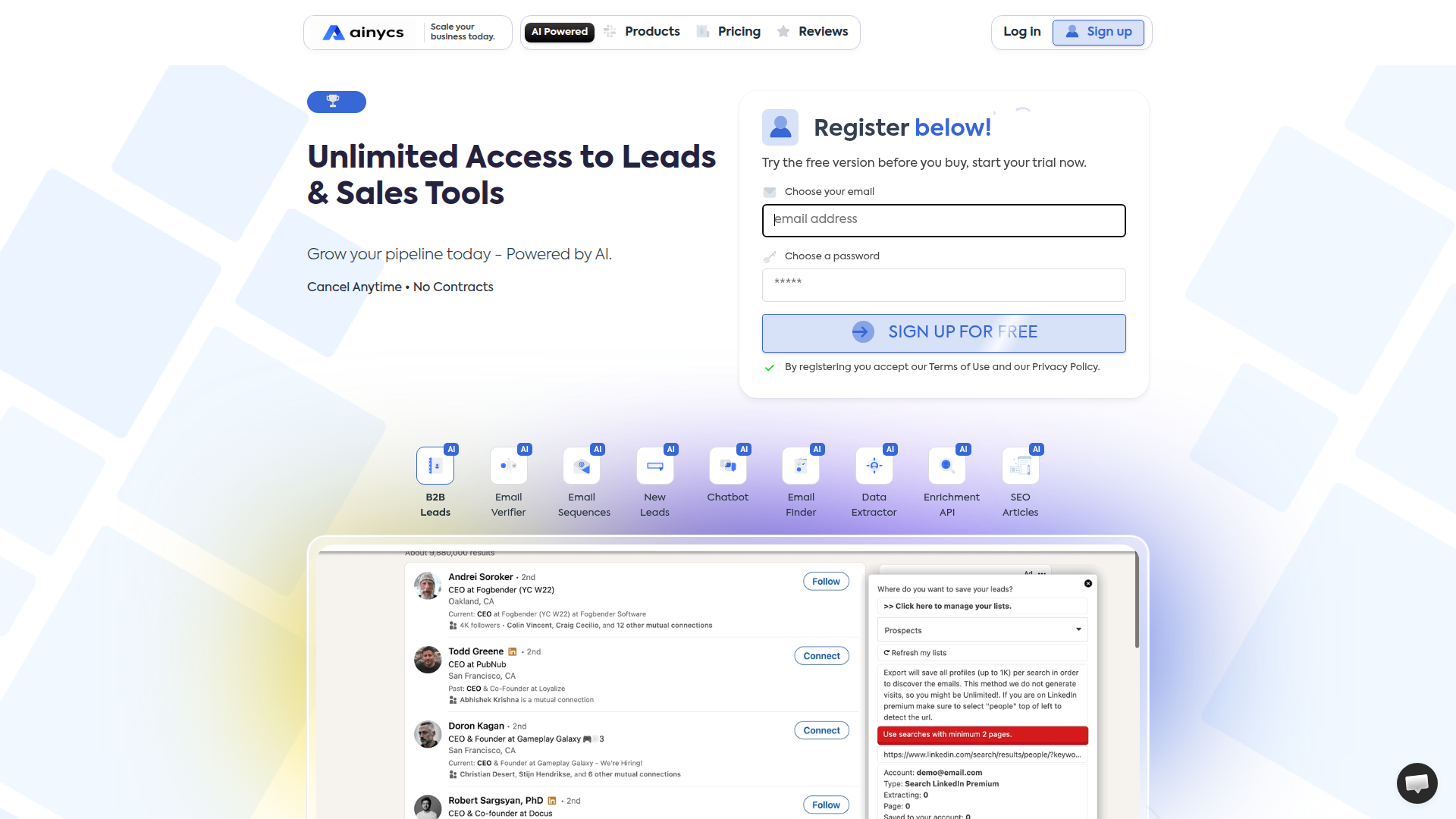
With Ainycs, businesses can elevate their lead generation and sales strategies by utilizing cutting-edge AI technology. Ainycs offers a powerful suite of tools, including a B2B leads extractor and email verifier API, to help you create targeted email lists for outreach campaigns effortlessly. By integrating Ainycs into your marketing efforts, you can streamline the process of gathering and validating leads, ensuring your campaigns are both effective and efficient. Discover the potential of AI-driven solutions with Ainycs and transform your sales approach today. Explore Ainycs for smarter lead generation!
FAQ
- What is an Ideal Customer Profile (ICP) and why is it important?
An Ideal Customer Profile (ICP) defines the characteristics of individuals or businesses that benefit most from your products or services. It's crucial because it ensures your outreach efforts target the right audience, increasing engagement and conversion rates. - How can Snov.io help in building a targeted email list?
Snov.io provides a comprehensive database to find and verify business contacts, ensuring your outreach is directed at relevant prospects. Its search capabilities allow filtering contacts based on criteria like industry and location, aligning with your Ideal Customer Profile. - Why is it essential to enrich and verify your email list?
Enriching and verifying your email list ensures accurate and actionable contact details, maximizing engagement and conversion rates. This process includes adding verified email addresses and job titles, which allows for more personalized and impactful communication. - What are engagement and buying signals, and how do they help in prioritizing accounts?
Engagement signals include metrics like email open rates, while buying signals involve actions like demo requests. Analyzing these signals helps prioritize accounts more likely to convert, optimizing your outreach strategy and improving campaign efficiency. - How does automation improve email list management?
Automation streamlines email list management by handling repetitive tasks such as list updates and segmentation. It enables workflows that automatically adjust lists based on user behavior, saving time and increasing the precision of your outreach efforts. - What are the benefits of keeping your email list up to date?
Regularly updating your email list prevents contacting outdated or deactivated emails, which can waste resources and harm your sender reputation. An up-to-date list ensures your messages reach the right audience, enhancing the effectiveness of your campaigns. - How do lead magnets attract subscribers?
Lead magnets attract subscribers by offering valuable content in exchange for contact information. By segmenting your audience based on shared characteristics, you can tailor your messaging to resonate more deeply, boosting engagement and conversion rates. - Why is form placement strategy important in email list building?
Effective form placement strategies enhance engagement by ensuring sign-up forms are visible and accessible. Personalization in these forms, such as using recipient names, can boost interaction and retention, fostering stronger connections with your audience. - What role does A/B testing play in refining email strategies?
A/B testing helps refine email strategies by determining optimal sign-up timing and form placement. By comparing different versions, you gain insights into audience preferences, allowing for more effective and targeted outreach efforts. - How does segmenting your audience improve engagement?
Segmenting your audience allows for tailored messaging that resonates with specific interests and needs. This targeted approach not only boosts engagement but also enhances conversion rates, as recipients receive content relevant to their preferences.