


- Ainycs
- /
- Blog
- /
- 9 Top Email Marketing Tools for Lead Generation: Features, Pricing, and Best Practices

- 03rd Nov '26
- Ainycs
- 24 minutes read
9 Top Email Marketing Tools for Lead Generation: Features, Pricing, and Best Practices
In the rapidly evolving landscape of digital marketing, selecting the right email marketing tools can significantly impact your lead generation efforts. This comprehensive guide from Ainycs test delves into the top email marketing solutions available today, highlighting their features, pricing options, and best practices. Readers will gain insights into essential aspects such as automation, user-friendly interfaces, and advanced segmentation capabilities that streamline marketing campaigns. The article also explores the importance of analytics, security certifications, and integration with other marketing tools, ensuring that businesses can enhance their outreach strategies effectively. Moreover, it provides a comparative analysis of free versus paid tools, helping startups and small businesses make informed decisions. By understanding these critical components, marketers can optimize their email campaigns, improve customer engagement, and ultimately drive sales growth. Whether you're a seasoned marketer or new to email marketing, this article equips you with the knowledge to choose the best tools for your needs in 2026.
1. Discover the Best Email Marketing Tools for Lead Generation
Key Features to Consider in Email Marketing Tools
When selecting an email marketing tool for lead generation, it's crucial to identify key features that align with your business needs. Essential capabilities include automation, which streamlines your marketing efforts by scheduling emails and managing follow-ups. Integration with CRM systems is also vital, allowing seamless data sharing and enhancing customer relationship management.
Another important feature is deliverability. A tool with high deliverability rates ensures your emails land in the inbox rather than the spam folder, maximizing engagement. Additionally, user-friendly interfaces can significantly reduce the learning curve, making it easier for teams to implement and execute campaigns efficiently.
Comparing Pricing and Capabilities of Leading Platforms
Pricing and capabilities vary across different email marketing platforms. For instance, Mailchimp offers a free plan for small businesses managing up to 500 contacts, with paid tiers starting at around $11 per month. In contrast, Constant Contact provides more robust features for e-commerce businesses, with pricing beginning at approximately $12 per month.
When evaluating options, consider the trade-offs between free and paid plans. While free plans are suitable for startups with limited budgets, they often come with restrictions on features and contact limits. Paid plans, however, offer advanced functionalities such as enhanced analytics and customizable templates, which can be crucial for scaling your marketing efforts.
For a detailed comparison of tools tailored for e-commerce, platforms like Shopify Email and Klaviyo are worth exploring. They offer specialized features that cater to online retailers, such as product recommendations and purchase behavior tracking. For more insights on the best email marketing tools for e-commerce, visit this resource.
| Platform | Free Plan | Starting Price | Best For |
|---|---|---|---|
| Mailchimp | Yes | $11/month | Small Businesses |
| Constant Contact | No | $12/month | E-commerce |
| Klaviyo | Yes | $20/month | E-commerce |
- Consider automation features for efficient campaign management.
- Evaluate integration capabilities with existing CRM systems.
- Compare pricing plans to find the best fit for your budget and needs.
Understanding the features of the top email marketing tools for lead generation is essential, but evaluating their pricing plans will help you make a more informed decision tailored to your budget.
Evaluate Pricing Plans for Top Email Marketing Platforms
Understanding Pricing Structures and Options
Before diving into the pricing plans of the top email marketing tools for lead generation, it's crucial to understand the different pricing structures and options available. Many platforms offer tiered pricing, which typically includes basic, standard, and premium plans. These tiers often vary based on the number of subscribers, emails sent per month, and additional features like automation and analytics.
For instance, a basic plan might support up to 1,000 subscribers and include essential features like templates and basic reporting. In contrast, a premium plan could allow for unlimited subscribers and offer advanced features such as A/B testing and personalized customer support. It's important to assess your current needs and anticipate future growth to choose a plan that offers the best value.
Common Mistakes and How to Avoid Them
One common mistake businesses make when selecting an email marketing platform is opting for the cheapest plan without considering the long-term needs. While a lower-cost plan might seem attractive initially, it can lead to limitations as your subscriber list grows. It's often more cost-effective to choose a plan that aligns with your projected growth.
Another pitfall is overlooking hidden costs. Some platforms charge extra for additional features or overage fees if you exceed your subscriber limit. Always read the fine print and ensure you understand all potential costs involved. By doing so, you can avoid unexpected charges and ensure the platform remains within your budget.
To explore more about the best tools available, check out this comprehensive guide on email marketing tools for small businesses.
| Platform | Basic Plan (Monthly) | Premium Plan (Monthly) |
|---|---|---|
| Tool A | $15 | $99 |
| Tool B | $20 | $150 |
| Tool C | Pricing unclear | $200 |
Understanding the pricing plans of various email marketing tools sets the stage for exploring their user-friendly features, which can significantly enhance your lead generation efforts.
2. Explore User-Friendly Features in Email Marketing Software
Key Features for User-Friendly Email Marketing Software
When selecting email marketing software, it is crucial to consider features that enhance user experience. Look for platforms that offer drag-and-drop editors, which simplify the process of designing visually appealing emails without needing coding skills. Additionally, templates that are customizable and responsive can significantly reduce the time spent on campaign creation.
Another important feature is AI-assisted writing, which helps craft engaging content and subject lines. This can be particularly beneficial for businesses looking to optimize their messaging. Also, consider tools that provide advanced analytics to track email performance, as these insights can guide future marketing strategies.
Automation Complexity and Pricing Tiers
Automation is a critical component of email marketing, and different platforms offer varying levels of complexity. Some tools provide simple automation sequences ideal for straightforward campaigns, while others offer complex multi-step journeys to cater to more sophisticated needs. It's essential to choose a platform that aligns with your business's automation requirements.
Pricing tiers for email marketing tools often start around $9 to $16 per month for basic plans. Many platforms also offer free plans for smaller contact lists, typically up to 1,000 contacts. As your contact list grows, consider the scalability of the pricing structure to ensure it remains cost-effective in the long term.
For a detailed comparison of pricing and features, explore platforms focused on email marketing software tools that can meet diverse business needs.
- Drag-and-drop editors for easy email design
- AI-assisted content creation
- Advanced analytics for performance tracking
- Simple to complex automation sequences
- Scalable pricing tiers
| Feature | Benefit |
|---|---|
| Drag-and-Drop Editor | Simplifies email design |
| AI Writing Assistance | Enhances content quality |
| Advanced Analytics | Informs strategy with insights |

3. Learn How Automation Enhances Lead Generation Efforts
Understanding Automation Before Taking Action
Before diving into automation, it's crucial to grasp how it can transform your lead generation efforts. Automation in email marketing refers to using software to automate repetitive tasks such as sending emails, segmenting lists, and tracking responses. This allows marketers to focus on strategy and creativity rather than manual operations. A basic understanding of these processes can help in selecting the right tools and strategies that align with your business goals.
Automation tools typically offer features like drip campaigns, behavior-triggered emails, and advanced segmentation. These features ensure that your emails reach the right audience at the right time, significantly improving engagement rates. Knowing these capabilities helps you set realistic expectations and measure success effectively.
Practical Steps to Implement Automation
Implementing automation in your email marketing strategy involves several key steps. First, identify the tasks that can be automated, such as follow-up emails or welcome sequences. This decision should be based on your specific business needs and the behavior patterns of your target audience.
- Identify tasks suitable for automation, like follow-up emails or welcome sequences.
- Choose a platform that offers necessary features, considering ease of use and integration capabilities.
- Evaluate the effectiveness using metrics such as open rates and conversion rates.
Next, choose a platform that offers the features you need. Consider factors like ease of use, integration capabilities, and pricing. For instance, some tools offer free trials, which can be a great way to test their functionalities before committing. Remember, the right tool should not only automate tasks but also provide insights through analytics to help you refine your strategy.
Finally, evaluate the effectiveness of your automation efforts. Use metrics such as open rates, click-through rates, and conversion rates to assess performance. Regularly reviewing these metrics will help you understand what's working and where adjustments are needed, ensuring continuous improvement in your lead generation efforts.
4. Understand the Importance of Analytics in Email Campaigns
Key Metrics to Monitor for Effective Campaigns
To optimize email marketing campaigns, it's crucial to track key metrics that provide insights into performance. Open rates and click-through rates are fundamental metrics that indicate how engaging your subject lines and content are. Additionally, monitoring bounce rates can help identify issues with email deliverability. Campaigns that effectively use targeted analytics can increase conversion rates by up to 20%, making it essential to focus on these metrics.
Understanding these metrics allows marketers to make informed decisions and adjust strategies accordingly. For example, A/B testing can be used to determine the most effective subject lines, significantly impacting open rates. By continuously analyzing these metrics, businesses can refine their approach to maximize engagement and lead generation.
Best Tools for Enhancing Email Marketing Performance
To fully leverage the power of analytics, investing in the right tools is essential. There are several platforms available that specialize in tracking and analyzing email marketing performance. These tools can monitor user engagement metrics, such as click-through and bounce rates, providing valuable insights into how recipients interact with your emails.
Integrating analytics tools with other marketing channels can also enhance segmentation efforts. For instance, segmentation based on analytics can lead to a 14% higher open rate. By aligning email analytics with broader marketing strategies, businesses can create more personalized and effective campaigns.
For those looking to explore further, platforms focused on lead generation tools can provide additional resources to enhance email campaign effectiveness. These tools help refine strategies, ensuring that the top email marketing tools for lead generation are utilized to their fullest potential.
5. Identify Tools with Advanced Segmentation Capabilities
Key Features for Effective Segmentation
When selecting an email marketing tool with advanced segmentation capabilities, look for features that allow you to segment your audience based on demographics, behavior, and engagement levels. Tools that offer dynamic segmentation can automatically update lists as subscriber actions change, ensuring that your campaigns remain relevant. Additionally, the ability to create complex segmentation rules using multiple criteria is crucial for targeting specific audience segments effectively.
Platforms with robust segmentation features often include advanced workflow builders that support intricate automation processes. These builders are essential for creating personalized journeys that enhance lead generation efforts. Look for tools that provide these features at competitive starting prices, typically around $15 per month, to ensure you are getting good value for your investment.
Benefits of Integrating with CRM Systems
Integrating your email marketing tool with a CRM system can significantly enhance your lead generation strategy. This integration allows for seamless data sharing between platforms, ensuring that your campaigns are informed by the most current customer data. Such integration is particularly crucial for B2B teams, where accurate targeting and follow-up can make a substantial difference in conversion rates.
CRM integration supports more targeted campaigns by utilizing customer data to create personalized content. This data-driven personalization can lead to higher engagement rates and improved conversion metrics. As many platforms offer free plans for small lists, typically covering 500 to 1,000 contacts, it's possible to start integrating these capabilities without a significant initial investment.
Pricing and User Experience Considerations
When evaluating email marketing tools, consider the pricing structures and user experience they offer. Many platforms provide free tiers for smaller lists, which is a great way for beginners to explore advanced segmentation features without financial commitment. However, as your list grows, understanding the pricing options becomes essential to manage costs effectively.
User-friendly interfaces are important, especially for small teams that may not have dedicated IT support. Platforms that offer intuitive design and ease of use can streamline the process of setting up and managing campaigns, allowing teams to focus on crafting effective messages rather than navigating complex software.
For more insights on enhancing your lead generation efforts, explore platforms focused on data enrichment tools that can help teams maximize their reach and effectiveness.
6. Find Email Marketing Tools with Excellent Customer Support
Understanding the Importance of Customer Support
When selecting an email marketing tool, excellent customer support is crucial for ensuring smooth operations and resolving issues quickly. It's important to understand that tools with robust support can significantly reduce downtime and enhance user experience. Look for platforms that offer 24/7 support, live chat, and comprehensive knowledge bases. These features are particularly beneficial if your team operates across different time zones or lacks extensive technical expertise.
Consider the communication channels available. Tools that offer multiple support options such as phone, email, and chat typically provide more flexibility and quicker resolutions. Additionally, check if the tool provides dedicated account managers or priority support for premium users, which can be a valuable asset for businesses with complex needs.
Avoiding Common Mistakes in Evaluating Support
A common mistake when evaluating email marketing tools is overlooking the quality of customer support. Many users focus solely on features and pricing, neglecting how support quality can impact their overall experience. To avoid this, prioritize tools that have a proven track record of responsive and helpful support teams.
Another pitfall is failing to test the support before committing to a tool. Engage with their customer support during a trial period to assess response times and the helpfulness of their responses. This hands-on approach will give you a realistic expectation of the support you can anticipate post-purchase.
Practical Steps for Choosing the Right Tool
Begin by listing your specific support needs and comparing them against the offerings of various tools. Consider factors such as the complexity of your campaigns, the technical expertise of your team, and your business hours. Tools that align closely with these needs are likely to provide the best support experience.
Evaluate user reviews and testimonials to gain insights into the real-world performance of the support teams. Look for patterns in feedback regarding response times, issue resolution, and overall satisfaction. This information can help you make an informed decision that balances both functionality and support quality.

Understanding the importance of customer support in email marketing tools can lead to a more informed assessment of how well these tools integrate with other marketing solutions.
7. Assess Integration Options with Other Marketing Tools
Understanding Integration Needs and Benefits
Before diving into the integration options, it's crucial to understand what you aim to achieve by integrating email marketing tools with other marketing platforms. Integration can streamline workflows, enhance data accuracy, and provide a more holistic view of your marketing efforts. By connecting your email marketing tool with CRM systems, social media platforms, and analytics tools, you can automate tasks and ensure that all parts of your marketing strategy work in harmony.
Consider the specific needs of your business. For instance, if your focus is on customer relationship management, integrating with a CRM can help maintain consistent communication and track customer interactions effectively. Conversely, if your goal is to enhance data analysis, connecting with analytics tools will provide deeper insights into campaign performance.
Common Pitfalls and How to Avoid Them
One common mistake businesses make is choosing tools that don't fully integrate with their existing systems. This can lead to data silos, where information is trapped in one system and inaccessible to others. To avoid this, ensure that the email marketing tool you choose offers robust integration capabilities with your existing platforms. Check for compatibility with the tools you currently use, such as CRM, e-commerce platforms, or social media management tools.
Another pitfall is underestimating the complexity of integration. Some integrations may require technical expertise or additional resources to implement effectively. It's essential to evaluate whether your team has the necessary skills or if you'll need external support. Additionally, consider the potential costs associated with integration, as some tools may charge extra for advanced connectivity features.
For practical guidance on setting up effective email sequences, visit our comprehensive step-by-step guide.
- Ensure compatibility with existing systems
- Evaluate the complexity and resource needs of integration
- Consider potential additional costs for advanced features
Practical SMB Setups
Essential Features for Lead Generation
When selecting an email marketing tool for small and medium businesses (SMBs), it's crucial to focus on user-friendly platforms that offer drag-and-drop features. These tools simplify the creation of visually appealing emails without requiring extensive technical knowledge. Additionally, platforms that provide pre-made templates can significantly reduce the time needed to launch campaigns, allowing businesses to focus more on strategy and less on design.
Another important feature is the integration capability with other marketing channels. Tools that combine email marketing with SMS and landing pages can enhance customer engagement and lead nurturing. This multi-channel approach often results in higher conversion rates as it allows businesses to reach their audience through their preferred communication method.
Case Studies Highlighting Effectiveness
Real-world examples demonstrate the impact of using effective email marketing tools. For instance, platforms with high deliverability rates ensure that emails reach potential leads effectively, which is critical for any successful campaign. Tools that cater to specific niches, such as ecommerce or content creators, often offer tailored features that address unique industry needs.
Moreover, the role of analytics in optimizing email campaigns cannot be overstated. By analyzing open rates, click-through rates, and other metrics, businesses can refine their strategies to improve performance. Advanced automation features in some tools allow for targeted messaging based on user behavior, further enhancing the effectiveness of email campaigns.
For more insights on selecting the right email marketing platform, visit this guide.
- Choose platforms with drag-and-drop editors for ease of use.
- Look for tools that integrate with SMS and landing pages.
- Prioritize high deliverability rates and template variety.
8. Examine Security Features in Email Marketing Solutions
Key Security Certifications for Email Marketing Tools
When evaluating the top email marketing tools for lead generation, it's crucial to consider their security certifications. Certifications such as SOC 2 are essential as they demonstrate a tool's commitment to data protection and privacy. SOC 2 compliance ensures that a vendor has adequate controls in place to protect customer data, which is vital for maintaining trust and meeting regulatory requirements.
Another important certification to look for is ISO 27001, which sets the standard for information security management systems. Tools with this certification typically have robust processes for managing sensitive information, helping businesses safeguard their data effectively. These certifications are not just about compliance; they also enhance a tool's credibility and reassure customers about the security of their data.
Impact of Security Features on Email Marketing Performance
Security features can significantly affect email deliverability and engagement rates. For instance, implementing encryption for data in transit and at rest ensures that sensitive information is protected from unauthorized access. While this enhances security, it may also impact the speed of email delivery. However, the trade-off is often worth it, as security-conscious users are more likely to engage with emails that demonstrate a commitment to data protection.
Moreover, tools that provide audit logs and role-based access controls allow businesses to monitor data access and usage effectively. This not only helps in maintaining data integrity but also improves compliance with data protection regulations. Such features can lead to higher engagement rates, especially among users who prioritize security in their interactions with brands.
For more insights on selecting the right tools, platforms focused on email marketing automation tools can provide valuable guidance.
| Security Feature | Benefit |
|---|---|
| Encryption in Transit | Protects data from interception during transmission |
| Role-Based Access Controls | Ensures only authorized users can access sensitive data |
| SOC 2 Compliance | Enhances trust and meets regulatory standards |
Understanding the security features of email marketing tools is essential for protecting sensitive data, which can also influence the choice between free and paid options for startups.
Compare Free vs Paid Email Marketing Tools for Startups
Key Considerations for Selecting Email Marketing Tools
When deciding between free and paid email marketing tools, startups need to evaluate their specific needs and budget constraints. Free tools like Mailchimp and Sendinblue offer basic features suitable for small email lists. These platforms typically include essential functionalities such as email templates and basic analytics. However, they often come with limitations on the number of emails sent per month and may include branding in the emails.
On the other hand, paid options like ActiveCampaign and HubSpot provide advanced features such as automation, segmentation, and integration with other marketing tools. These tools are ideal for startups looking to scale their marketing efforts and require more sophisticated capabilities. The decision should be based on the startup's growth plans, the complexity of their marketing campaigns, and the need for advanced features.
Common Mistakes and How to Avoid Them
A frequent mistake startups make is opting for free tools without considering future growth. While free options are cost-effective initially, they can become restrictive as the business expands. It's crucial to assess the scalability of the platform and whether it can accommodate larger email lists and more complex campaigns in the future.
Another mistake is underestimating the importance of customer support. Paid tools often offer superior support, which can be invaluable when troubleshooting issues or implementing new features. Startups should weigh the trade-off between immediate cost savings and long-term functionality and support.
To evaluate whether the chosen approach is working, startups should monitor key metrics such as open rates, click-through rates, and conversion rates. These metrics will help determine if the tool is effectively supporting lead generation efforts. For a more detailed comparison of email marketing software, consider exploring this Email Marketing Software Comparison Guide.
| Feature | Free Tools | Paid Tools |
|---|---|---|
| Email Limits | Typically limited | Unlimited or high limits |
| Automation | Basic | Advanced |
| Customer Support | Limited | Comprehensive |
- Evaluate current and future email marketing needs.
- Consider the importance of customer support and scalability.
- Monitor key metrics to assess tool effectiveness.
As you explore the differences between free and paid email marketing tools, it’s essential to consider how these choices can influence your lead generation strategies.
9. Gather Tips for Maximising Lead Generation with Email Marketing
Understanding Key Concepts Before Taking Action
Before diving into email marketing strategies for lead generation, it's crucial to understand the foundational elements that drive success. One of the primary factors is audience segmentation, which involves dividing your email list into smaller groups based on specific criteria such as demographics, purchase history, or engagement levels. This allows for more personalized and relevant messaging, which typically results in higher conversion rates.
Another essential concept is the importance of crafting compelling subject lines and content. A well-written subject line can significantly increase open rates, while engaging content keeps readers interested and encourages them to take action. Additionally, understanding the timing and frequency of your emails is vital. Sending too many emails can lead to unsubscribes, while too few might result in missed opportunities.
Common Mistakes and How to Avoid Them
Many marketers fall into the trap of not testing their email campaigns, leading to missed opportunities for optimization. A/B testing different elements like subject lines, content, and send times can provide valuable insights into what resonates best with your audience. This practice helps refine your approach and improve overall results.
Another common mistake is neglecting mobile optimization. With a significant portion of emails opened on mobile devices, ensuring that your emails are mobile-friendly is crucial. This includes using responsive design and keeping content concise and easy to read on smaller screens.
Lastly, failing to track and analyze key metrics such as open rates, click-through rates, and conversion rates can impede your ability to measure success and make data-driven decisions. Regularly reviewing these metrics allows you to adjust your strategies and maximize lead generation outcomes.
For a comprehensive look at the Top 9 Email Marketing Tools For B2B Lead Generation In 2026, consider exploring how these tools can enhance your email campaigns and lead generation efforts.
Conclusion
In the dynamic world of digital marketing, selecting the most effective email marketing tools for lead generation is crucial for any business aiming to enhance its outreach strategies. This article from Ainycs test provides a comprehensive guide to the top email marketing platforms, emphasizing the importance of automation, user-friendly interfaces, and advanced segmentation capabilities. By understanding the pricing structures, businesses can make informed decisions that align with their budget and growth projections. The article also highlights the significance of analytics in optimizing campaign performance, ensuring that marketers can track key metrics like open rates and click-through rates to boost engagement. Additionally, the importance of robust security features and seamless integration with other marketing tools is underscored, safeguarding customer data and streamlining operations. As you explore these tools, consider starting with platforms that offer free trials or basic plans to test their features and scalability. This approach allows you to tailor your email marketing strategy effectively, maximizing lead generation and driving sales growth in 2026.
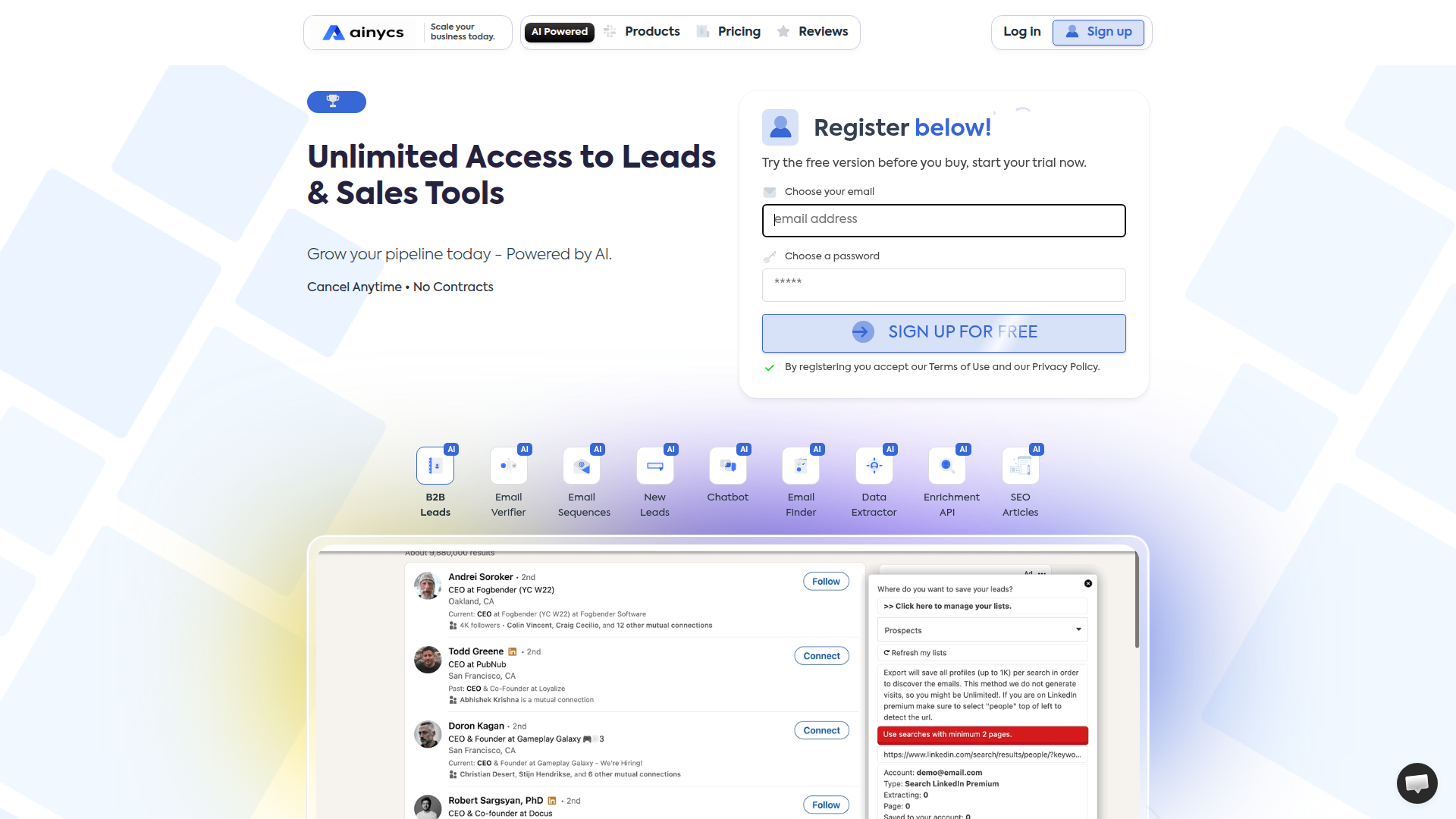
Discover the power of Ainycs, an AI-driven software suite that revolutionizes lead generation and sales for businesses of all sizes. With features like a B2B leads extractor and email verifier API, Ainycs helps streamline your email marketing efforts and ensures your campaigns reach their full potential. By providing access to fresh leads and customizable outreach tools, Ainycs is an essential asset for any organization looking to boost sales and enhance their marketing strategy. Explore Ainycs for smarter lead generation.
FAQ
- What are the essential features to consider when selecting email marketing tools for lead generation?
When selecting email marketing tools, prioritize features like automation, CRM integration, and high deliverability rates. These capabilities streamline marketing efforts, enhance customer relationship management, and ensure emails reach the inbox rather than the spam folder, maximizing engagement. - How do pricing plans for email marketing platforms typically vary?
Pricing plans often include tiered options such as basic, standard, and premium, which vary based on subscriber numbers, email limits, and additional features like automation. It's important to assess your current needs and future growth to choose a plan offering the best value. - What user-friendly features should you look for in email marketing software?
Look for drag-and-drop editors for easy design, customizable templates, and AI-assisted writing for crafting engaging content. These features enhance user experience by simplifying email creation and optimizing messaging, which is crucial for effective marketing strategies. - How does automation improve lead generation in email marketing?
Automation allows marketers to focus on strategy by automating repetitive tasks like sending emails and segmenting lists. Features such as drip campaigns and behavior-triggered emails ensure messages reach the right audience at the right time, significantly improving engagement rates. - Why is it important to track analytics in email campaigns?
Tracking key metrics like open rates, click-through rates, and bounce rates provides insights into campaign performance. Analyzing these metrics allows marketers to make informed decisions, adjust strategies, and ultimately increase conversion rates by up to 20%. - What should you consider when choosing tools with advanced segmentation capabilities?
Select tools that allow segmentation based on demographics, behavior, and engagement levels. Dynamic segmentation and complex rules using multiple criteria ensure campaigns remain relevant, targeting specific audience segments effectively for improved engagement and conversion. - How does excellent customer support enhance the use of email marketing tools?
Robust customer support reduces downtime and enhances user experience. Look for platforms offering 24/7 support, live chat, and comprehensive knowledge bases, especially if your team operates across different time zones, ensuring smooth operations and quick issue resolution. - What are the benefits of integrating email marketing tools with other marketing platforms?
Integration streamlines workflows, enhances data accuracy, and provides a holistic view of marketing efforts. Connecting email tools with CRM systems, social media, and analytics platforms automates tasks and ensures cohesive marketing strategies across channels. - What security certifications should you look for in email marketing solutions?
Look for certifications like SOC 2, which demonstrate a tool's commitment to data protection and privacy. SOC 2 compliance ensures adequate controls are in place to protect customer data, crucial for maintaining trust and meeting regulatory requirements. - How do free email marketing tools compare to paid options for startups?
Free tools like Mailchimp and Sendinblue offer basic features suitable for small lists but often have limitations on email volume and may include branding. Paid options provide advanced functionalities like enhanced analytics and customizable templates, essential for scaling marketing efforts.